Endives, Love & Paris
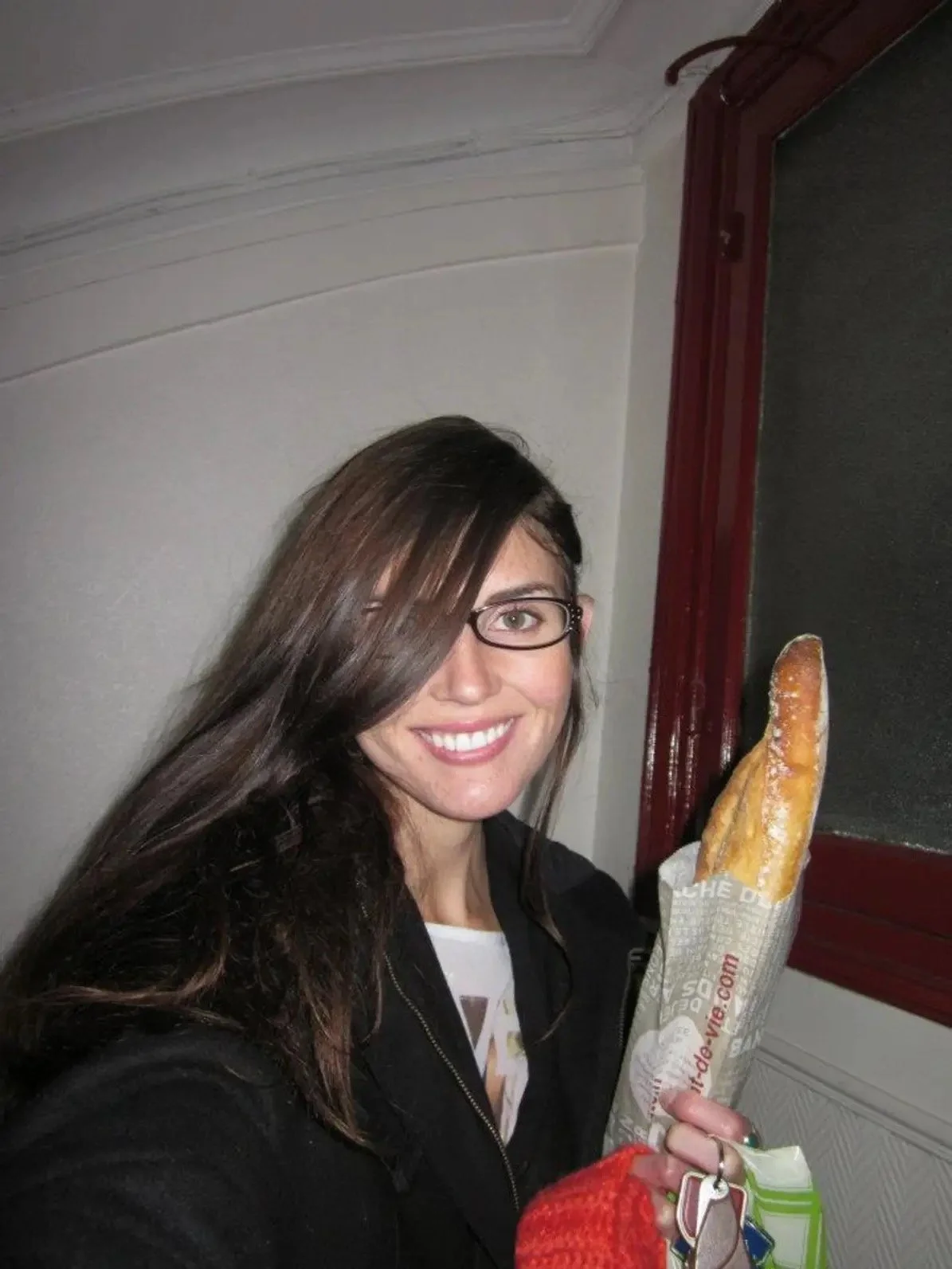
Me in Paris, starry-eyed after having picked up my first fresh baguette, circa 2012
I made an endive salad yesterday, and it reminded me of France. Even if the affair was short-lived in the scheme of things, it changed my life.
And I couldn’t help but go down memory lane.
There are many things I brought home with me from Paris, including a new identity—although one could argue it had already been in the works before I took my first steps onto that dingy train from Charles de Gaulle to Gare du Nord.
Me in Paris, starry-eyed after having picked up my first fresh baguette, circa 2012
So there I was, chopping up the endives in Matthieu’s small Parisian apartment on Richard-Lenoir. Matthieu had taught me many things—like what endives were and how to make a salad parfait by layering them in a glass between chopped walnuts, goat cheese, olive oil, balsamic glaze, and salt & pepper.
In Matthieu fashion, one day I was preparing some grapefruit, or pamplemousse, for us and he saw the way I was extracting the flesh of the fruit with the pith still intact and stopped me in my tracks.
“No, let me show you.”
Apparently, he had a famous chef uncle who taught him the correct way, but also he was French…
He proceeded to demonstrate how to carefully remove the fruit from between the pith, so you don’t get that bitter taste. I’d never known. But there are a great many things middle Americans don’t learn about food or cooking.
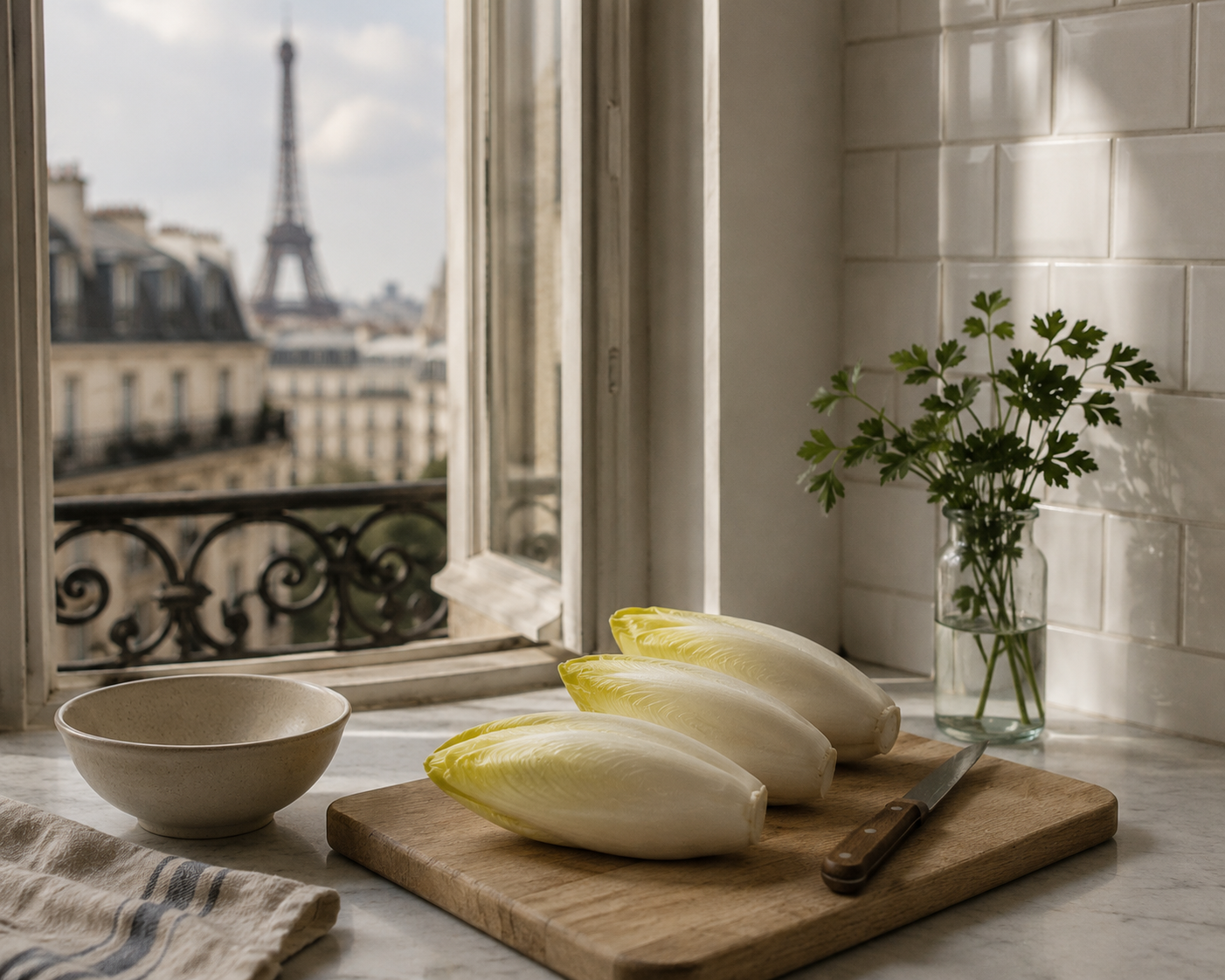
Endives, like the ones I would chop up at Mattheiu’s apartment
Back to the endives—they were one of my favorites; there’s something about the bitterness of the leaves that tickled my fancy—surprisingly so. But that’s what happens when you open your palate to new cultures and people.
The sun was shining through the windows, and I was helping prepare lunch—likely on a Saturday when we were both home.
I’d been interning at a French cooking production company. Matthieu, on the other hand, worked at a subsidiary of the World Bank. I never fully understood what he did, actually. He was a PhD statistician, and I have to say, his intelligence, curiosity, and thirst for knowledge played a big role in my attraction. He was endlessly intriguing to me. And even in our disagreements, there was a sort of tension, an intellectual sparring—one that I found magnetizing.
We would toast the baguettes in his little oven—the extra ones we’d stored in the freezer from the week prior. I loved them like this; they still had that crack when you’d bite, with the corners nearly cutting the insides of your mouth. Oh yes, I can still taste them fresh out of the oven with some salted butter and honey.
We shared a voracious appetite for life, for exploring, for new cultures, for learning, for food, for art, for literature, for coffee, and for wine—although his knowledge of wine and espresso far surpassed my own.
The French have a way of classifying love, and one of those categories is un grand amour. That is to say, a big love story.
And while Matthieu and I eventually went our separate ways, he was a grand amour for me. No one had made such a cataclysmic impact up to that point of my life. No one had loved me in that almost familial way—where the love extended beyond romance. He cared for me.
And I’d say, even to this day, he and I hold each other in high regard, and look back at those times and smile—even amidst the painful moments when we discovered we weren’t compatible for a lifetime together.
In fact, I will never forget the day I met him. I was still afraid of taking the metro by myself, especially when it came to changing lines. So he met me in the middle to do it together. He immediately felt safe and inviting. He had a funny gait to him—stepping with a slight pigeon-toe, and always like he had somewhere to be. Boyish bouncy brown hair, and with what one might say is a proper French nose. I love a strong nose. And dark intent Spanish eyes. His grandfather fought in the Spanish Civil War.
He dressed like a functionnaire. I don’t know that it directly translates, but someone in a bureaucratic position—with a blue buttoned-up shirt, a sweater vest and jacket, and light-brown Italian leather shoes. I found him a bit nerdy. I didn’t know I’d fall for him. My heart was still raw.
When I arrived at his apartment, he immediately started explaining the cheeses, the charcuterie, the wine, and the macarons he’d picked out. The brasseries were all closed on a Monday.
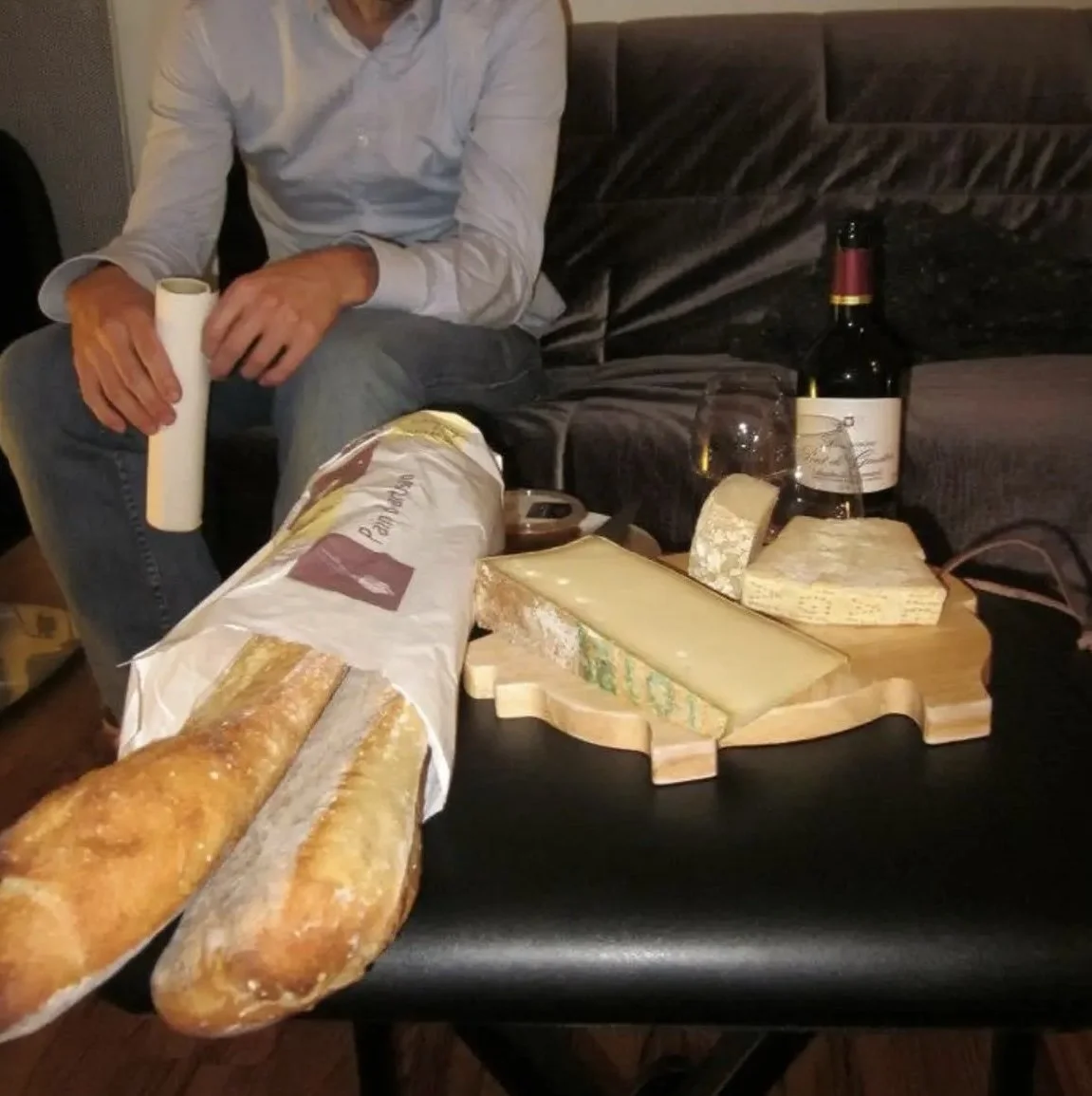
Matthieu with his curated picks of the best of Paris bread, cheese, and wine.
We spoke about politics and argued about which was better France or America. He had spent time living in New York City and was clearly enamored by it. You could say in the same way I was enamored by Paris. And so our sparring began.
His apartment was quaint with a bed, a piano, a full bookshelf, and a small futon where we sat, and he pulled up a piano bench for us to eat on.
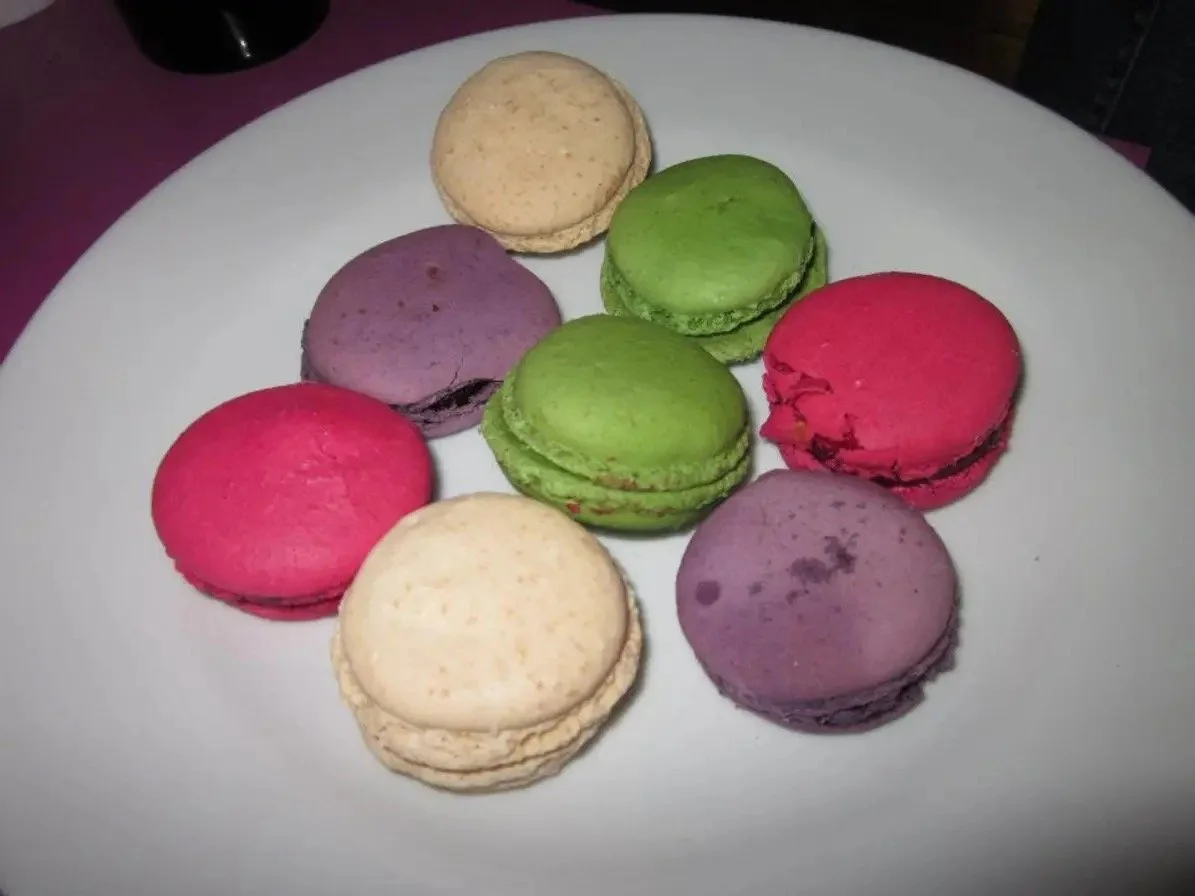
The macarons Matthieu offered me; I’m pretty sure my favorite was the caramel or vanilla bean
He said he believed in the Buddhist axiom that by having too many belongings you start to belong to them.
The evening passed in a blink; it grew dark, and Matthieu began to play the piano. First, Eric Satie, telling me how Satie himself left specific instructions on the sheet music for how to emotionally interpret his pieces. He liked that, and so did I.
Then he started playing “Comptine d’un autre été : L’Après-midi” from Amélie. I remember looking out the window at the petite rue, the street lamps glimmering here and there, and feeling like I had entered some kind of dream. I had.
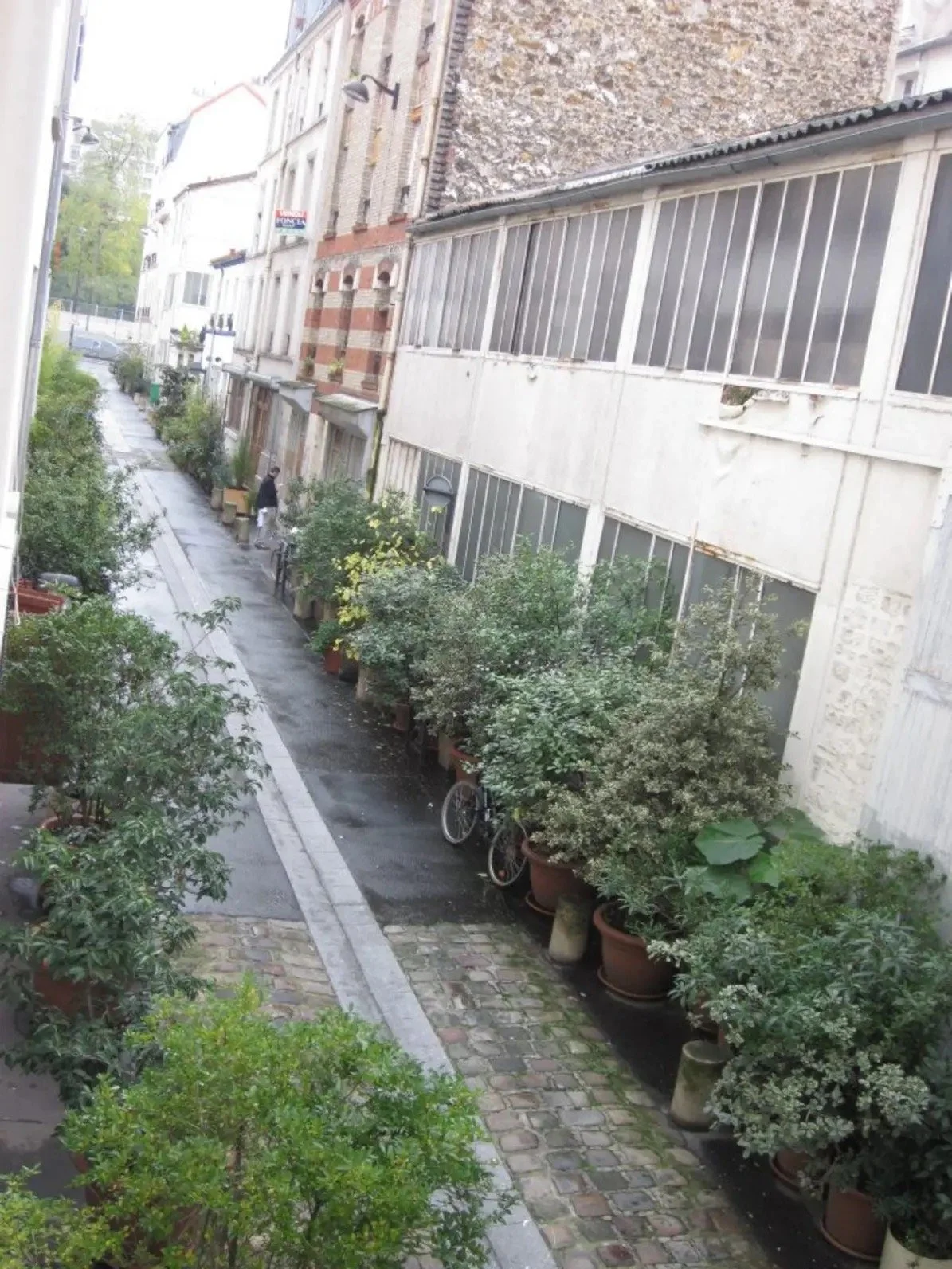
The view from Matthieu’s window